Examples of time-saving office automation for small businesses


Office automation is defined as the use of technology to handle repetitive administrative tasks without manual effort, freeing staff to focus on higher-value work. The best examples of time-saving office automation, such as automated meeting notes, email triage, document summarisation, and approval routing, can reclaim 90–120 minutes per knowledge worker per day. That is nearly two full hours returned to your team every single day. For small business owners and office managers, that time compounds quickly into real competitive advantage.
1. Automated meeting notes and action item capture
Meeting documentation is one of the highest-frequency administrative burdens in any office. AI-powered transcription tools connect directly to video conferencing platforms and produce structured notes, action items, and follow-up reminders within minutes of a meeting ending. Each automated meeting saves 15–20 minutes of manual note-taking and post-meeting cleanup. Across five meetings a week, that adds up to nearly two hours recovered without any extra effort.
The practical workflow looks like this:
Pro Tip: Configure your AI meeting tool to post summaries directly into your team’s Slack channel or project board. That single step eliminates the “did anyone take notes?” follow-up email entirely.
2. Email triage and prioritisation automation

Unmanaged inboxes are a productivity drain that most office managers underestimate. AI-driven email sorting reads incoming messages, assigns priority scores, and surfaces the most urgent items at the top of your queue. Teams that apply this approach save 20–30 minutes daily on inbox management alone. The real gain is not just speed. It is the reduction in mental switching between low-priority noise and genuinely urgent requests.
Effective email automation typically includes:
Pro Tip: Set up a “pending reply” label with an automated reminder trigger. If a flagged email receives no response within 24 hours, the system nudges you. This alone eliminates most dropped-ball situations.
Marketing and support teams that apply context-aware communication automation achieve a 40–60% reduction in first-response time. Faster responses build client trust without requiring more staff.
3. Document and report summarisation automation
Long reports, supplier proposals, and client briefs pile up fast in a small business. Automated summarisation tools process lengthy documents and produce concise executive summaries in seconds. This approach saves 15–25 minutes per day on document handling, and the benefit scales with the volume of reading your team manages.
Common use cases include:
The table below shows where summarisation automation delivers the clearest return:
Document typeTime saved per documentPrimary benefitWeekly sales report10–15 minutesFaster leadership reviewClient proposal15–20 minutesQuicker response draftingSupplier contract20–25 minutesFaster risk identificationProject status update8–12 minutesReduced reporting overhead
For teams managing workflow optimisation across multiple clients or departments, document automation is often the fastest win to implement and the easiest to measure.
4. Approval routing and status update automation
Manual approval chains are where projects go to stall. Someone sends a document for sign-off, it sits in an inbox for three days, and the whole project waits. Automated approval routing sends the right document to the right person the moment it is ready, and escalates automatically if no action is taken within a set window. Each automated approval cycle reclaims 10–20 minutes compared to manual follow-up.
Key components of a working approval automation:
Pro Tip: Build your escalation path before you launch the automation. Knowing who receives the alert when an approver is unresponsive prevents the system from creating a new bottleneck instead of removing one.
Status update automation pairs naturally with approval routing. Instead of team members writing individual progress emails, a connected system pulls data from your project tool and sends a formatted update on a fixed schedule. The team spends zero time on the update. The manager receives consistent, comparable data every time.
5. CRM activity capture and sales pipeline automation
Sales teams lose significant time logging calls, updating deal stages, and chasing pipeline reviews manually. Automating CRM activity capture means every call, email, and meeting is logged without a rep lifting a finger. Sales teams save 3–5 hours weekly by automating CRM updates and pipeline reviews. That is a full half-day returned to selling rather than administration.
The automation captures:
For a deeper look at practical CRM workflow automations, the examples that generate the most time savings in 2026 centre on removing the manual data entry step entirely rather than just speeding it up.
6. AI-driven RFP generation and proposal automation
Responding to a Request for Proposal (RFP) manually takes three to four days of focused work. Automating RFP generation reduces that to roughly two hours, saving 20 or more hours per document. The system pulls relevant company information, past proposal sections, and pricing data from connected tools like Google Drive, Notion, and a CRM, then assembles a structured draft ready for human review.
This is one of the highest-value examples of office productivity automation for small businesses that compete for contracts. The time savings are large enough to change whether a small team can realistically respond to multiple RFPs in a month.
7. Proactive monitoring and automated diagnostic alerts
Silent automation failures are a real risk. A workflow breaks, no one notices, and data stops flowing for days before someone catches the gap. Proactive monitoring automation solves this by sending automated alerts via Slack or Teams the moment a workflow fails or produces an unexpected result. This shifts your role from manual executor to automation supervisor.
The practical setup involves:
This approach is especially valuable for small business owners who cannot afford a dedicated IT team watching systems around the clock.
8. Marketing task automation for small teams
Small marketing teams carry a disproportionate workload relative to their size. Automating recurring tasks like social media scheduling, lead nurturing emails, and performance report generation removes the administrative layer from creative work. The marketing automation benefits for small businesses are well-documented: faster campaign execution, more consistent follow-up, and measurable time savings on reporting.
A basic marketing automation stack for a small business typically handles:
9. Agentic automation for end-to-end task completion
Standard automation handles one step at a time. Agentic automation completes entire multi-tool workflows without human intervention at each stage. The distinction matters because most office bottlenecks are not single-step problems. They are chains of dependent tasks that each require a handoff.
An agentic workflow might receive a new client enquiry, create a CRM record, draft a personalised response email, schedule a discovery call, and notify the account manager, all without a human touching the process. Treating AI agents as persistent team members that need proper onboarding and access to company workflows produces far better results than treating them as plug-and-play tools.
Key takeaways
The most effective office automation targets high-frequency administrative tasks first, reclaiming up to two hours daily per employee while reducing cognitive load and burnout.
PointDetailsStart with high-frequency tasksAutomate meeting notes, email triage, and daily reports before complex workflows.Measure time saved per taskEach automation should reclaim 10–30 minutes daily to justify the setup effort.Build monitoring into every workflowSet diagnostic alerts so silent failures are caught immediately, not days later.Treat AI agents as team membersOnboard automation tools with proper access and context for reliable end-to-end results.Scale graduallyAdd one automation at a time to maintain adoption and catch issues early.
What I have learned about automation ROI in small businesses
The conventional advice says to automate everything you can as fast as you can. I disagree with that framing entirely. The small business owners who get the best results start with a single, high-frequency, low-risk workflow, usually email triage or daily reporting, and get it working reliably before touching anything else. Starting with simple, repeatable workflows is not timid. It is the approach that actually sticks.
The part that rarely gets discussed is the cognitive load reduction. When your team stops mentally tracking whether the weekly report went out, whether the approval reminder was sent, or whether the meeting notes were distributed, something shifts. People are less drained at the end of the day. Automation reduces burnout rates by 15–20% and increases engagement meaningfully. That is not a soft benefit. That is a retention and performance outcome.
My honest observation after working with small business owners on automation rollouts is that the human-in-the-loop phase matters more than most guides admit. Run your first automation in parallel with the manual process for two weeks. Catch the edge cases. Build trust in the output. Then remove the manual step. Skipping that phase is where most failed rollouts begin.
The businesses that treat automation as an ongoing system to monitor and refine, rather than a one-time setup, are the ones that compound the gains over time.
How Tech Business Development helps small businesses automate effectively
Running a small business means every hour counts. Tech Business Development works directly with small business owners and office managers to identify which administrative tasks are costing the most time and build practical automation workflows around them.
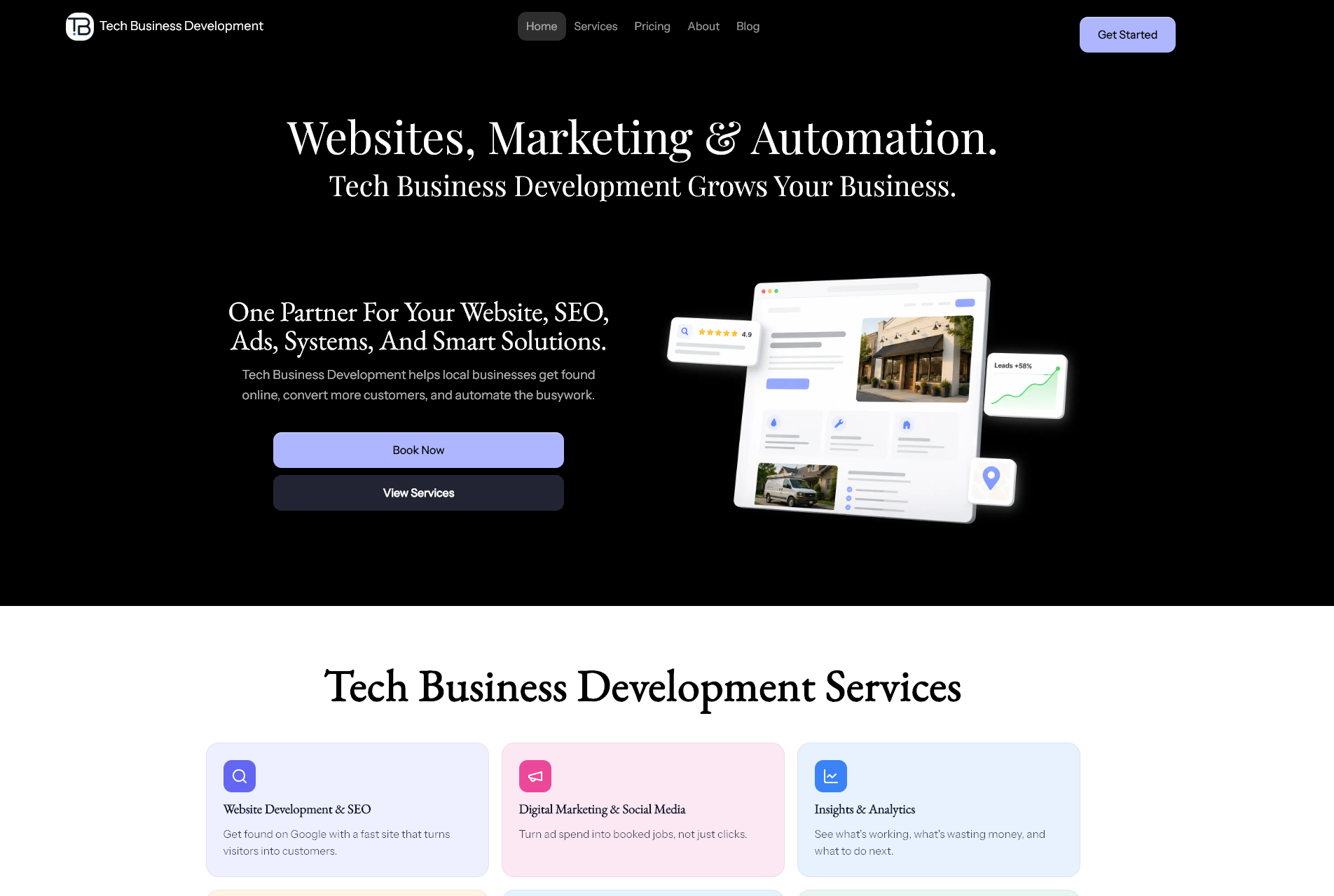
From workflow automation consulting to full implementation, Tech Business Development handles the technical setup so you do not have to. The team specialises in connecting your existing tools, whether that is Google Workspace, a CRM, or your project management platform, into automated systems that run reliably without constant oversight. Operational costs drop by up to 50% for clients who implement the right automations in the right order. Visit Tech Business Development to see how the process works for businesses at your stage.
FAQ
What are the best examples of time-saving office automation?
The highest-impact examples include automated meeting notes, email triage, document summarisation, approval routing, and CRM activity capture. Each of these saves 10–30 minutes daily per employee.
How much time can office automation realistically save?
Knowledge workers using AI workflow automation reclaim 90–120 minutes per day, which translates to a 20–25% productivity gain across the team.
Where should a small business start with office automation?
Start with a single high-frequency, low-risk workflow such as email triage or daily status reporting. Getting one automation working reliably builds confidence and reveals what to automate next.
Do office automation tools require technical expertise to set up?
Most entry-level automation tools require no coding, but connecting multiple platforms into a reliable workflow benefits from expert guidance. Setup time typically ranges from 30 minutes to two hours for standard configurations.
How do I know if my automation is working correctly?
Set up proactive monitoring with diagnostic alerts in Slack or Teams. These alerts notify you immediately when a workflow fails, so problems are caught within minutes rather than days.